The quick answer
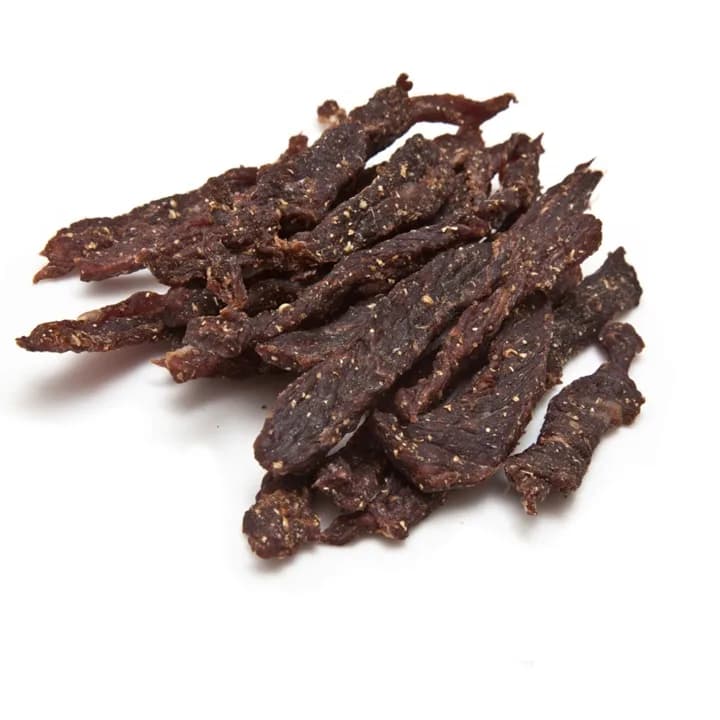
Jerky is cooked dry. Biltong is air-dried. Most of the other differences follow from that.
- Drying: jerky is dehydrated or smoked with heat for hours. Biltong hangs in moving air for days, with no cooking.
- Cut: jerky is sliced thin before drying. Biltong is dried in thick strips and sliced afterwards (or eaten whole).
- Cure: jerky is usually marinated in soy, sugar and smoke flavours. Biltong is cured with vinegar, salt, pepper and coriander.
- Taste: jerky is often sweet and smoky. Biltong is savoury and tangy, with that distinctive coriander note.
- Texture: jerky is uniformly chewy. Biltong ranges from soft and tender (“wet”) to firm and crumbly (“dry”).
Which is healthier?
Both are high in protein. Because biltong is usually made without added sugar, it’s often the lower-sugar, lower-carb option, which is why it has become popular with gym-goers, keto and paleo eaters. Labels vary between brands, so check the nutrition panel. Ours is on every pack.
Which should I try?
If you love jerky, you’ll probably love biltong, and you might find it more tender and more “meaty”. Start with biltong sticks, which are the closest in feel to jerky, or a 100 g pack if you just want a taste. If you like heat, go straight to Peri-Peri.
Want something completely different? Try droëwors, South Africa’s dried sausage.
Questions
Is biltong a type of jerky?
They’re both dried meat, but biltong is a different product with its own method. It’s air-dried rather than heat-dried, cured with vinegar and spices, and usually has no added sugar.
Does biltong have more protein than jerky?
Both are very protein-dense because most of the water is removed. Exact figures depend on the cut, the fat and how dry it is, so compare nutrition panels.
Do you sell jerky?
We specialise in biltong, droëwors and other South African dried meats rather than American-style jerky. If you’re after a jerky-style snack, our biltong sticks are the place to start.